
The First Threshold
Before life can be nourished, remembered, brought into truthful belonging, or created anew, what continues to wound it must stop.
Human flourishing cannot emerge under every condition.
A seed may contain the possibility of a forest, but it still needs soil, water, light, space, and protection long enough to take root.
So do we.
Sacred Protection is not about avoiding life.
Challenge can strengthen us.
Risk, failure, struggle, and adventure all matter.
The work is learning the difference between what strengthens life and what steadily diminishes it.
Protection is the holy no that makes the holy yes possible.
The boundary is not the destination.
Life is.
Sacred Protection
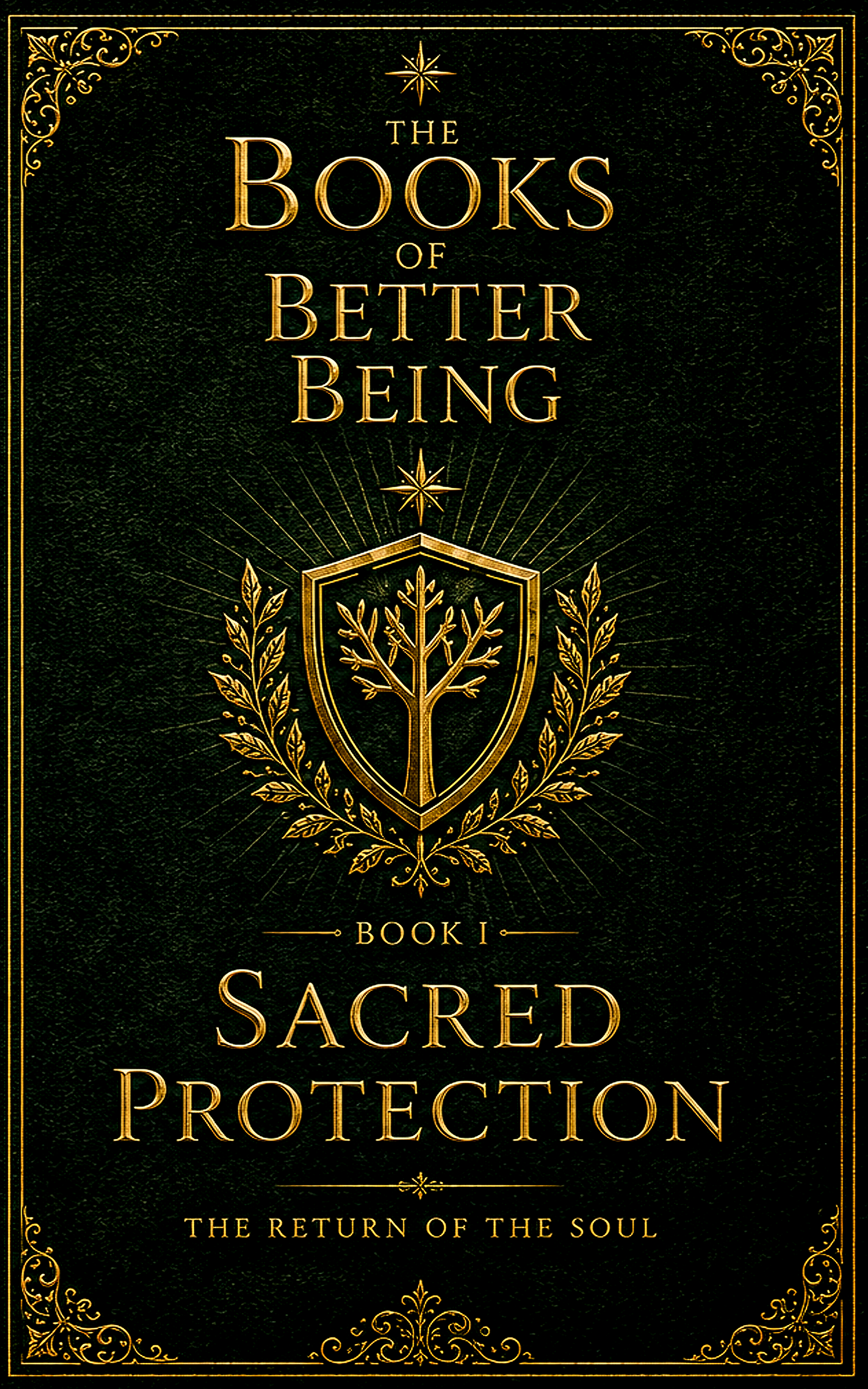
Human flourishing cannot emerge under every condition.
A seed may contain the possibility of a forest, but it cannot grow on concrete.
Human beings also require conditions in which life can take root.
Curiosity can be crushed.
Attention can be captured.
Will can be broken.
The body can be exhausted.
The imagination can become so crowded with other people's images that it never discovers its own.
Sacred Protection begins by creating enough ground for something living to return.
WHY PROTECTION COMES FIRST
THE SACRED IS REAL
Sacred Protection begins with remembrance.
Life is sacred.
The soul is real.
The body carries wisdom.
The child arrives as a soul.
The Earth is alive.
Not everything may be used, priced, exposed, consumed, optimized, or taken.
The sacred existed before our institutions.
Our task is not to invent it.
Our task is to remember what should never have been made available to every appetite.
SOMETHING IS OFF
Protection begins with recognition.
Many people know something is wrong before they can explain it.
The body recoils.
The soul becomes tired.
The home stops feeling like sanctuary.
The child struggles inside conditions everyone calls normal.
The person senses that the official explanation does not fully match the life they are living.
Sacred Protection restores the right to notice.
Not every feeling is truth.
Not every suspicion is wisdom.
But discernment cannot begin if we are trained to betray perception before we investigate it.
THE SEVEN PLAGUES
The wound of the age appears through seven recurring distortions:
Confusion
When information increases but discernment disappears.
Depletion
When life is drained faster than it can be restored.
Dependency
When capability is surrendered for convenience, access, safety, or permission.
Rootlessness
When people lose connection with body, place, memory, ancestry, craft, nature, and community.
Loneliness
When people are surrounded by others but cannot belong without performing.
Domination
When power forgets that its purpose is service.
Extraction
When life is converted into output, profit, data, status, yield, labor, or resource without right return.
We name these patterns not to make sickness into identity.
We name them because a person cannot protect what they have been forbidden to see.
WHEN THE SERVANT BECOMES THE RULER
Human beings create systems to serve life.
Money can serve exchange.
Technology can enlarge capability.
Medicine can serve healing.
Education can help a child unfold.
Government can protect public order.
Institutions can carry responsibilities too large for one person.
The danger begins when the servant becomes greater than what it was created to serve.
When the metric becomes more important than reality.
When the institution protects itself before the people.
When technology enlarges dependency rather than capability.
When protection becomes control.
Sacred Protection asks of every system:
What do you serve?
Nothing created to serve life should stand above life.
POWER REQUIRES SACRED RESPONS-IBILITY
Humanity now possesses extraordinary power.
Our technologies can reach the body, the child, attention, memory, food, land, water, sexuality, communication, culture, and the future at a scale our ancestors could barely imagine.
Capability has grown quickly.
Responsibility must grow with it.
The question is no longer only:
Can we do this?
We must also ask:
Should we?
What does it serve?
What does it take?
Who becomes dependent?
What happens to the child?
What happens to the body?
What happens to the Earth?
What happens to the soul?
The greater the power, the greater the responsibility.
WHAT MUST BE PROTECTED
Protection becomes real when the sacred becomes specific.
The soul.
The body.
The senses.
The mind.
Attention.
The heart.
Children.
The home.
Marriage and relationship.
Privacy.
Beauty.
Memory.
Land.
Water.
Animals.
Community.
Human difference.
The future.
Protection does not mean treating these things as fragile.
It means refusing to make them endlessly available to forces that do not love them.
A boundary is not proven when it costs nothing.
A boundary becomes real when keeping it may cost approval, convenience, money, status, access, or belonging.
Sacred Protection restores the capacity to say:
No.
Not as contempt.
Not as fear.
Not as punishment.
As devotion.
Sometimes love requires refusal.
Sometimes responsibility means withdrawing participation.
Sometimes the only way to protect what matters is to stop feeding what consumes it.
THE HOLY NO
Living things have boundaries.
The body has skin.
The home has a door.
The mind has attention.
A family has an inner life.
The soul contains mysteries that do not belong to everyone.
A healthy threshold is neither permanently open nor permanently closed.
It can welcome.
It can refuse.
It can change its mind.
It can recognize that some things are easier to refuse before they enter.
The purpose of a threshold is not isolation.
It is right relationship.
PROTECT THE THRESHOLD
Sacred Protection can itself become distorted.
Protection without discernment becomes suspicion.
Protection without nourishment becomes hardness.
Protection without love becomes isolation.
Protection without courage becomes avoidance.
The goal is not to become afraid of life.
A protected person should become more capable of entering it.
More capable of relationship.
More capable of trust.
More capable of risk.
More capable of saying yes because they have learned how to say no.
Fear may bring a message.
It must not become the permanent climate of the soul.
PROTECTION IS NOT FEAR
Sometimes the answer is not to become better at enduring.
Sometimes the conditions themselves must change.
A person can spend years becoming more resilient to an arrangement that should never have required so much resilience.
Sacred Protection asks a different question:
What keeps producing the wound?
What are we continuing to feed?
What must stop?
What can be redesigned?
What can be built differently?
Protection is not only surviving the labyrinth.
Sometimes it means ending the arrangement that keeps demanding sacrifices.
CHANGE THE CONDITIONS
Protection is not the destination.
Humanity does not only need stronger defenses.
We need stronger forms of creation.
Homes that restore life.
Schools that help children become more fully themselves.
Technology that strengthens human capability.
Wealth that accepts responsibility.
Food systems that nourish land and people.
Communities that protect truthful belonging.
Art that restores reverence.
Institutions that remain accountable to what they serve.
Sacred Protection without Sacred Creation becomes endless defense.
Sacred Creation without Sacred Protection becomes available to extraction.
We need both.
A shield.
And a seed.
A SHIELD AND A SEED
The boundary is not the destination.
The no is not the destination.
The shield is not the destination.
Life is.
We protect what is alive because we believe in what it might become.
Once life is protected, it can be nourished.
What is nourished can remember.
What remembers can belong.
What belongs can create.
Sacred Protection is the first threshold of Better Being.
Protect what is alive.